
What Is Gum Arabic? Origin, Composition and Industrial Uses
A thorough guide to gum arabic: its botanical source, the Sahel gum belt, chemical composition, E414 food-grade specifications, and the industries that depend on it.
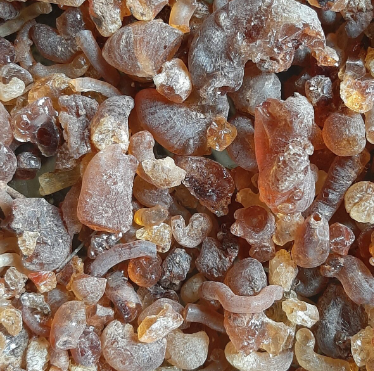
Gum arabic is one of the oldest documented food ingredients in the world. Egyptian papyri describe its use as a binder for pigment as early as 2000 BC, and today it remains an indispensable additive in confectionery, beverages, pharmaceuticals and printing inks. Yet despite its ubiquity, buyers and procurement teams regularly ask the same fundamental question: what exactly is it, and where does it come from?
Botanical Source: Acacia senegal and Acacia seyal
Gum arabic is the dried exudate collected from two closely related species of acacia tree:
- Acacia senegal (Senegalia senegal) — the primary commercial source, producing a light amber, friable resin with low viscosity and superior emulsification properties. It grows across a latitudinal band from Senegal through Sudan and into Ethiopia.
- Acacia seyal — produces a darker, more viscous, brittle gum known commercially as “talha.” Its emulsification performance is lower than senegal-type, but it is widely used in applications where colour and viscosity are less critical.
The tree taps itself when bark is damaged by insects, mechanical wounding or drought stress. Commercial production relies on deliberate tapping: harvesters make incisions in the bark with a flat-bladed tool, then collect the solidified nodules two to four weeks later.
The Sahel Gum Belt
Nearly 80–90 % of global gum arabic production originates from the Gum Belt — an arc of semi-arid savanna stretching approximately 5,400 km across ten countries at latitudes 10°N to 14°N. The principal producing countries are:
- Sudan — historically the world’s dominant exporter, accounting for 50–70 % of global supply in most years. The Blue Nile and Kordofan regions are the heartland.
- Chad — the second-largest exporter, with production expanding as Sudan’s political instability periodically disrupts supply.
- Nigeria — produces significant volumes, principally from the northern states.
- Senegal, Mali, Burkina Faso, Niger — contribute smaller volumes, with Senegal important for organic-certified supply.
Seasonality matters: tapping runs from October through June, and new-crop arrivals into Khartoum and N’Djamena warehouses typically occur between January and March. This timing shapes the global forward contract calendar.
Chemical Composition
Gum arabic is a complex heteropolysaccharide. Its backbone is an arabinogalactan protein (AGP) with branched chains containing:
- Arabinose and galactose as the primary sugar units
- Glucuronic acid and rhamnose in smaller proportions
- A covalently bound protein fraction (approximately 2 %) that is largely responsible for its emulsifying capacity
The molecular weight ranges from roughly 250,000 to 800,000 Da for Acacia senegal grades. This high molecular weight with relatively low viscosity is what makes it exceptional as an emulsifier and film former — properties that smaller molecules at equivalent concentrations cannot replicate.
Acacia seyal gum has a higher protein content but a different distribution that results in poorer emulsification performance.
Food Grade and the E414 Standard
In international food regulation, gum arabic is classified as E414 in the EU and is on the FDA’s GRAS (Generally Recognised As Safe) list. The primary quality standards are:
- FAO/WHO JECFA monograph — defines permitted impurity limits, moisture (max 15 %), total ash (max 4 %), acid-insoluble ash, and microbial limits.
- FCC (Food Chemicals Codex) — sets viscosity bands and optical rotation requirements.
- EU Regulation (EC) No 231/2012 — specifies permitted food-use applications and purity criteria aligned to JECFA.
Commercial grades traded by CarverAgri include:
| Grade | Form | Moisture | Key use |
|---|---|---|---|
| Hand-picked clean (HPC) | Nodule | ≤ 12 % | Confectionery, pharma |
| Kibbled | Pieces | ≤ 12 % | Spray-drying feedstock |
| Spray-dried powder | Powder | ≤ 8 % | Instant beverages, coatings |
| Talha (seyal) | Nodule/powder | ≤ 13 % | Printing inks, textiles |
For detailed specifications and current price indications, see our Gum Arabic product page.
Industrial Applications
Confectionery
Gum arabic is the defining ingredient in panning operations. The coating syrup deposited on dragées, jellybeans and chocolate shells requires a film-forming colloid that dries quickly without cracking, resists moisture and provides a glossy finish. At 20–40 % concentration in the panning solution, gum arabic forms a continuous protective film around each piece.
It also serves as the carrier in sugar crystallisation control — adding 0.2–0.5 % to boiled sugar solutions prevents undesirable graining in gummies and fruit pastilles.
Beverages
Emulsification of flavour oils in carbonated and still beverages depends heavily on gum arabic. A citrus oil-in-water emulsion stabilised with 15–25 % gum arabic (relative to oil) maintains droplet sizes below 1 µm for 12 months without phase separation — a performance standard few alternatives can match at equivalent cost.
In wine production, gum arabic at 15–30 g/hL improves mouthfeel, stabilises colour and reduces astringency after bottling.
Pharmaceuticals and Nutraceuticals
Its prebiotic fermentation profile has attracted significant research interest. Human clinical trials show that consumption of 10 g/day of gum arabic (Acacia senegal) selectively increases Bifidobacterium and Lactobacillus populations in the colon, with a concomitant increase in short-chain fatty acids. This positions it as a functional dietary fibre under EU Regulation 1924/2006 health claim considerations.
In tablet manufacture, gum arabic functions as a binder at 5–10 % inclusion and as a film coat component.
Printing and Lithography
Offset lithographic printing plates are coated with a gum arabic solution before storage to protect the hydrophilic non-image areas from oxidation and to maintain ink repellency. This remains one of the most technically demanding gum arabic applications, requiring very low viscosity, high-purity grades.
Sourcing and Supply Chain Considerations
Procurement managers working with gum arabic face several structural challenges:
Price volatility: Gum arabic prices are driven by Sahelian rainfall, political stability in Sudan and Chad, and currency movements. The CIF Hamburg benchmark for hand-picked clean grade can move 30–50 % in a single crop year.
Adulteration risk: The premium commanded by Acacia senegal HPC creates incentives for blending with lower-grade seyal or with synthetic gums. Buyers should require batch-specific FTIR spectroscopy or molecular weight distribution testing to verify species origin.
Sustainability certification: Organic-certified gum arabic from Senegal and the OHADA zone is increasingly requested by European food manufacturers. Chain-of-custody certification under NOP/EU organic standards requires co-operative-level documentation.
CarverAgri sources directly from licensed exporters in Khartoum, N’Djamena and Dakar, with full documentation available from origin through to your port of entry. Contact our sourcing desk for a sample request or forward contract quote.
Conclusion
Gum arabic occupies a unique position in the industrial ingredient supply chain: a natural, minimally processed exudate that performs functions no synthetic additive fully replicates at competitive cost. Understanding its botanical origins, the geography of the Sahel gum belt, its chemical properties and the standards that govern its trade is essential for any procurement team building a resilient supply strategy.
For specification sheets, laboratory analysis reports and volume-based pricing, reach out to our team — we maintain origin stocks in Khartoum and Dakar and can ship CIF to European, North American and Asian ports within standard lead times.